
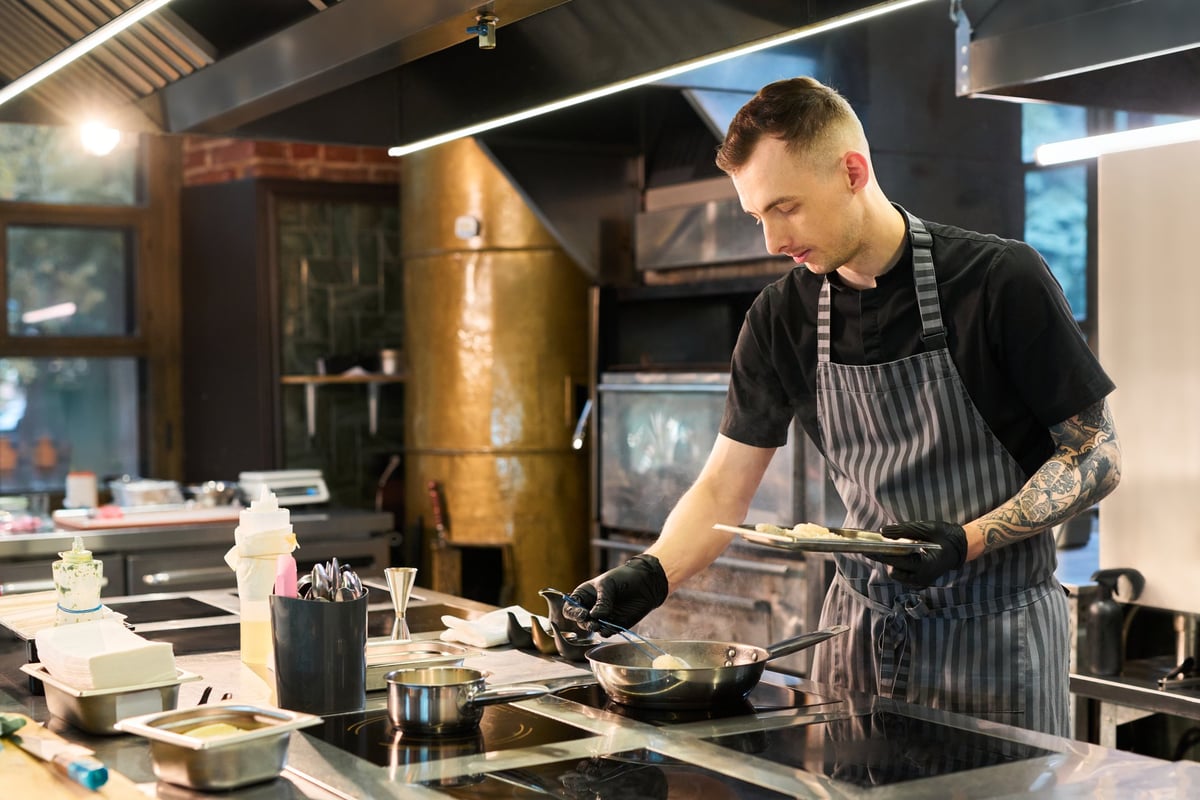
Commissary Kitchen on Long Island
A licensed commissary kitchen is the base of operations your food truck, cart, or mobile food business needs to operate legally in New York — prep space, cold storage, wash sinks, and potable water support in one approved facility.
Free, no-obligation walkthrough · Same-week availability
What a commissary kitchen does for a mobile food business
A commissary kitchen is the licensed facility a mobile food business operates from. It is where you prep ingredients before service, store product between shifts, restock the truck, wash equipment in a three-compartment sink, and handle waste and water properly. It is not a nicety — for a food truck operating in New York, having a licensed commissary base is generally a condition of operating legally.
That makes the commissary decision one of the first real operational choices a mobile vendor makes, and one of the ones that most affects day-to-day sanity. If your commissary is an hour away from where you serve, you lose hours and margin every single shift.
We provide a licensed commissary kitchen positioned centrally on Long Island, so trucks serving Nassau and Suffolk can prep and restock without burning half a day driving to and from their base.
What a licensed commissary includes
Our commissary provides the infrastructure that a mobile food business cannot carry on the truck itself: three-compartment wash sinks, hand-wash stations, commercial prep tables, walk-in refrigeration and freezer, dry storage racks, and proper grease and waste handling.
You also get loading access designed for restocking, so moving product between the commissary and the truck is a routine task rather than a daily obstacle course. That matters more than most new vendors expect — a badly designed commissary turns every shift into a logistics problem.
And you get assigned storage. Your product lives somewhere you control, at the correct temperature, with your name on it. That is the baseline a commissary has to deliver before anything else about it matters.
Three-compartment wash sinks
The wash, rinse, and sanitize setup required for commercial food equipment.
Walk-in cold storage
Refrigerated and frozen space for product between service days.
Restocking access
Loading access designed for moving product between the kitchen and the truck.
Assigned dry storage
Your own shelving for packaging, paper goods, and shelf-stable inventory.
Getting your truck permit and inspection paperwork in order
Mobile food vendors in New York deal with a specific set of requirements: health department permits, inspections of the truck itself, and typically a commissary relationship that has to be documented. Inspectors want to see that your mobile unit has a licensed base where prep, washing, and storage actually happen.
Renting commissary space gives you that documentation. You have a real licensed facility, a real address, and a real base of operations — which is what the permit process, delivery platforms you might work with, and any event organizer asking for vendor paperwork will want to see.
If you are new to operating a mobile food business on Long Island, ask us what commissary documentation typically looks like for vendors. It is a well-worn path and it is much easier to set up correctly the first time than to untangle later.
More than parking — a working production kitchen
Some commissary arrangements are little more than a place to park and plug in. Ours is a full commercial production kitchen, which changes what your business can do. You can batch-prep sauces and proteins in quantity, build out a menu that requires more than the truck's equipment allows, and stage large orders before an event.
That capacity matters for catering jobs in particular. A truck booked for a private event often needs more prep than the truck can physically do on site — shared kitchen space at the commissary handles that before you ever roll out.
It also gives mobile vendors a path to grow beyond the truck. Plenty of successful Long Island food brands started on a cart or truck and expanded into meal prep, packaged products, or delivery-only menus produced entirely from the commissary. The truck gets you customers; the commissary lets you scale past it.
Commissary kitchen rentals in Nassau County and Suffolk County
We serve food trucks, carts, and mobile vendors across Long Island, New York, from a facility at 3244 Sunrise Hwy in Wantagh, directly on Route 27. Trucks working the Huntington and Smithtown corridor, the Babylon and Bay Shore stretch, or the denser Nassau towns can all reach the commissary without a long haul.
For a mobile food business, distance from the commissary is a recurring tax on every operating day. A central base keeps your prep window practical and your margins intact, which is why location should be one of the first things you weigh when comparing commissary kitchens on Long Island.
Come see the space, look at how restocking would actually work for your truck, and check whether the storage and hours fit your service schedule. That is the honest test of whether a commissary will work for you.
Commissary Kitchen on Long — FAQs
Do I legally need a commissary kitchen for my food truck in New York?
Mobile food vendors in New York generally need a licensed commissary or base of operations to prep, store, and wash. Requirements vary by county and permit type, so confirm what applies to you with the relevant health department — we can tell you what documentation our facility provides.
What is included in a commissary kitchen rental?
Access to a licensed commercial kitchen with three-compartment wash sinks, hand-wash stations, prep tables, walk-in refrigeration and freezer, dry storage, grease and waste handling, and loading access for restocking.
Can I prep food at the commissary instead of on the truck?
Yes, and most vendors do. Prep work done at the commissary is faster and safer than trying to do everything on a truck. It also lets you handle larger catering jobs than the truck alone could support.
How much does commissary kitchen space cost on Long Island?
Cost depends on how much time and storage you need. Many vendors start with a set number of prep blocks per week plus storage. Call (717) 746-6284 and we will give you current rates.
Can I run a delivery-only menu out of the commissary?
Yes. A licensed commissary kitchen can serve as the production base for delivery-only and virtual restaurant brands, which is a common way for mobile vendors to add revenue beyond the truck.
Which parts of Long Island do you serve?
All of Nassau County and Suffolk County, New York — including Hempstead, Garden City, Freeport, Hicksville, Huntington, Melville, Farmingdale, Commack, Babylon, Patchogue, and Bay Shore.
Related kitchen rentals on Long Island
Looking for something slightly different? These pages cover the other ways food businesses rent kitchen space with us.
Shared Kitchen
Shared commercial kitchen access for producers who do not need a private facility.
Commercial Kitchen Rental
The full guide to licensed commercial kitchen space for rent on Long Island.
Food Production Kitchen
Higher-capacity production space for packaged foods and larger batch runs.
Kitchen Rental
How renting kitchen space on Long Island works and what to compare.
Ghost Kitchen Rental
Delivery-only kitchen space for virtual restaurants and cloud kitchen brands.
Nassau County Kitchens
Kitchen rentals for businesses based in western and central Nassau County.
Commissary kitchens for food trucks on Long Island
From our commercial kitchen rental guide.
Set up your Long Island commissary base
Tell us what you cook and roughly how much space you need. We'll come back with availability, rates, and a time to walk through the facility.
- Licensed, health-department approved facility
- Hourly, daily, weekly and monthly terms
- Storage, equipment and inspections included